Meta Connect 2025
Meta Quest Home
Home is the first thing you see when you put on a Quest headset, and the place you come back to between everything else.
Until 2025 it was a set of static environments you moved through by teleporting between fixed points. A new owner's first impression of VR was a room that undersold what the headset could actually do. We launched a new Immersive Home: a single space you move through freely, with four environments that relight the room around you, rebuilt on Meta's new Horizon Engine.
The objective
Shipped on time, featured in the Connect 2025 keynote as a flagship launch.
Unified locomotion, physics, and look and feel across Meta's core experiences.
Travel from Home into other destinations exceeded target, and time in the environment rose after launch.
Passed executive greenlight review on visual quality.
The outcomes
Launch a new Home environment for Quest, in time for Connect 2025.
Make moving between worlds feel continuous and consistent.
Make new places and new people easy to find.
Raise visual immersion without cost to load time or render quality.
No seams.
Not in the world, not in the team that built it.
An immersive environment ships as a whole, geometry, materials, motion, and sound all arrive at once, and people feel the disagreement between them before they can name it. That made collaboration a product requirement, not a process preference. I worked across team and org lines so environment art, audio, motion, and interaction design were solving the same problem at the same time instead of handing off to each other.
Central guidelines
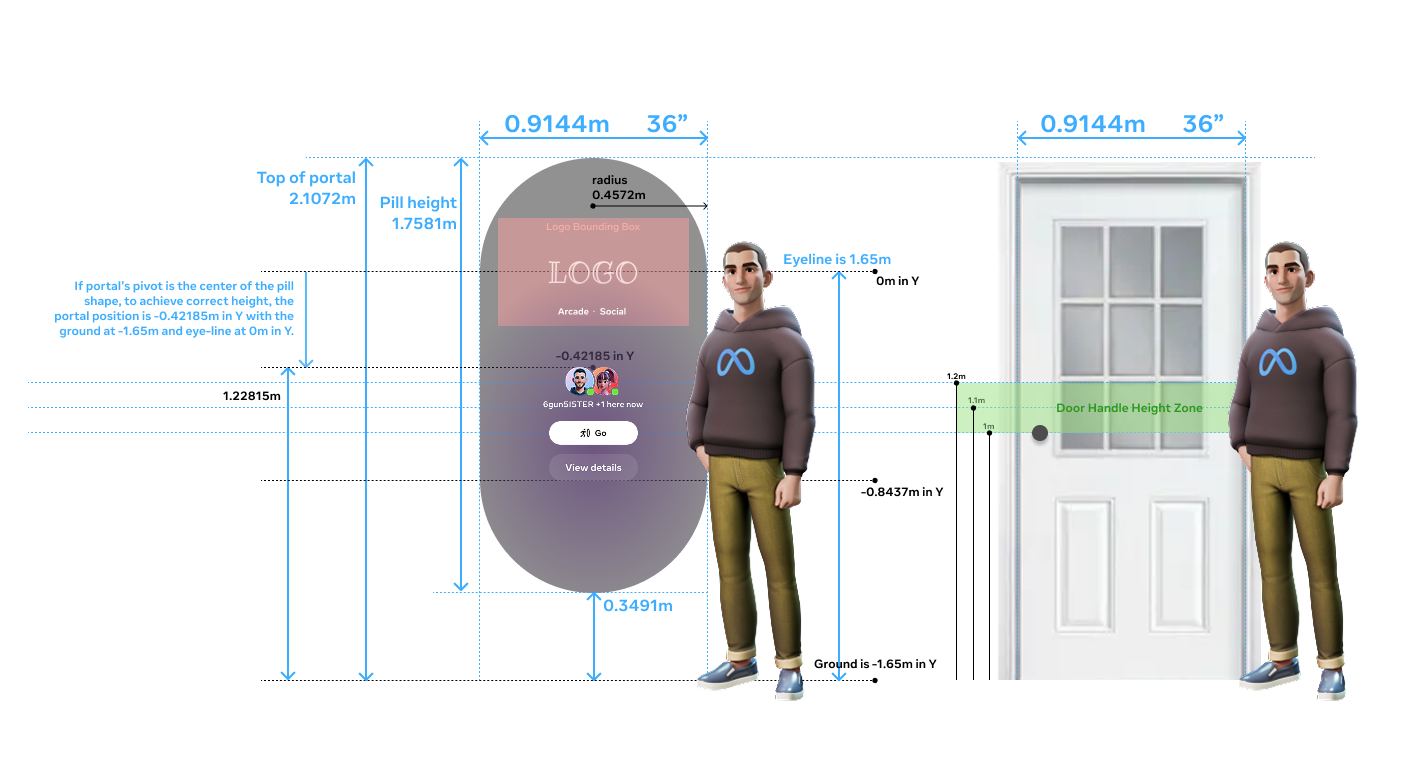
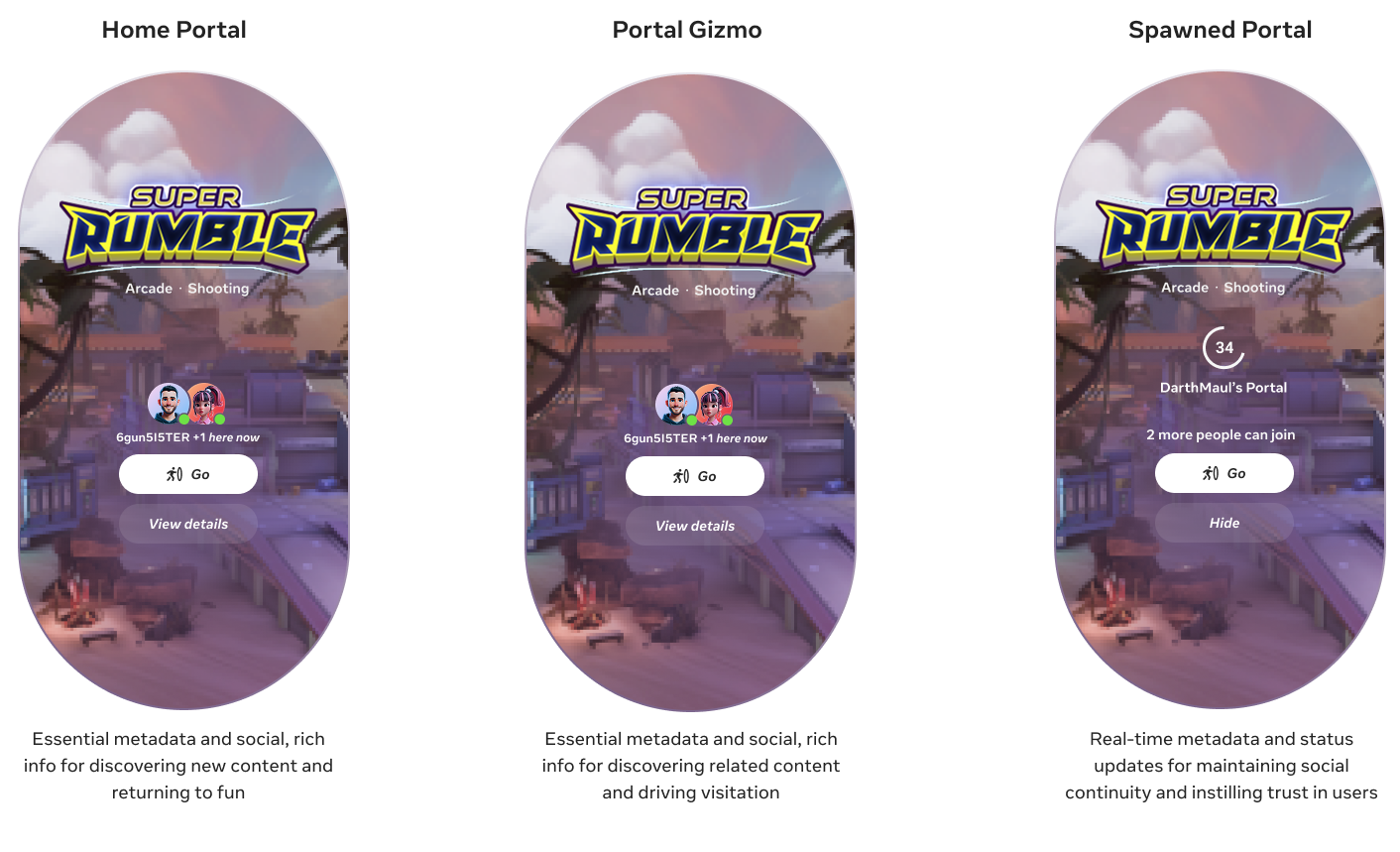
Craft doesn't survive scale on its own. Left alone, every team decides locally and the space ends up feeling like it was built by strangers. We set direction centrally, one set of guidelines for how things move, light, sound, and respond, so anyone building into Home knew what good looked like before they started. It made teams faster, not more constrained. Below is a select example of the Home Portal, in various configurations to satisfy various use cases.
Guidelines set the bar. A standing review is where it got calibrated.
We opened it to everyone building into Home and made it safe to bring work at any stage. A sketch shown early can change direction cheaply. A finished asset shown late usually can't, especially in our case where the deadline was set and announced globally.
It also meant people saw each other's work in progress, so alignment came from watching the space come together rather than from reading a document.
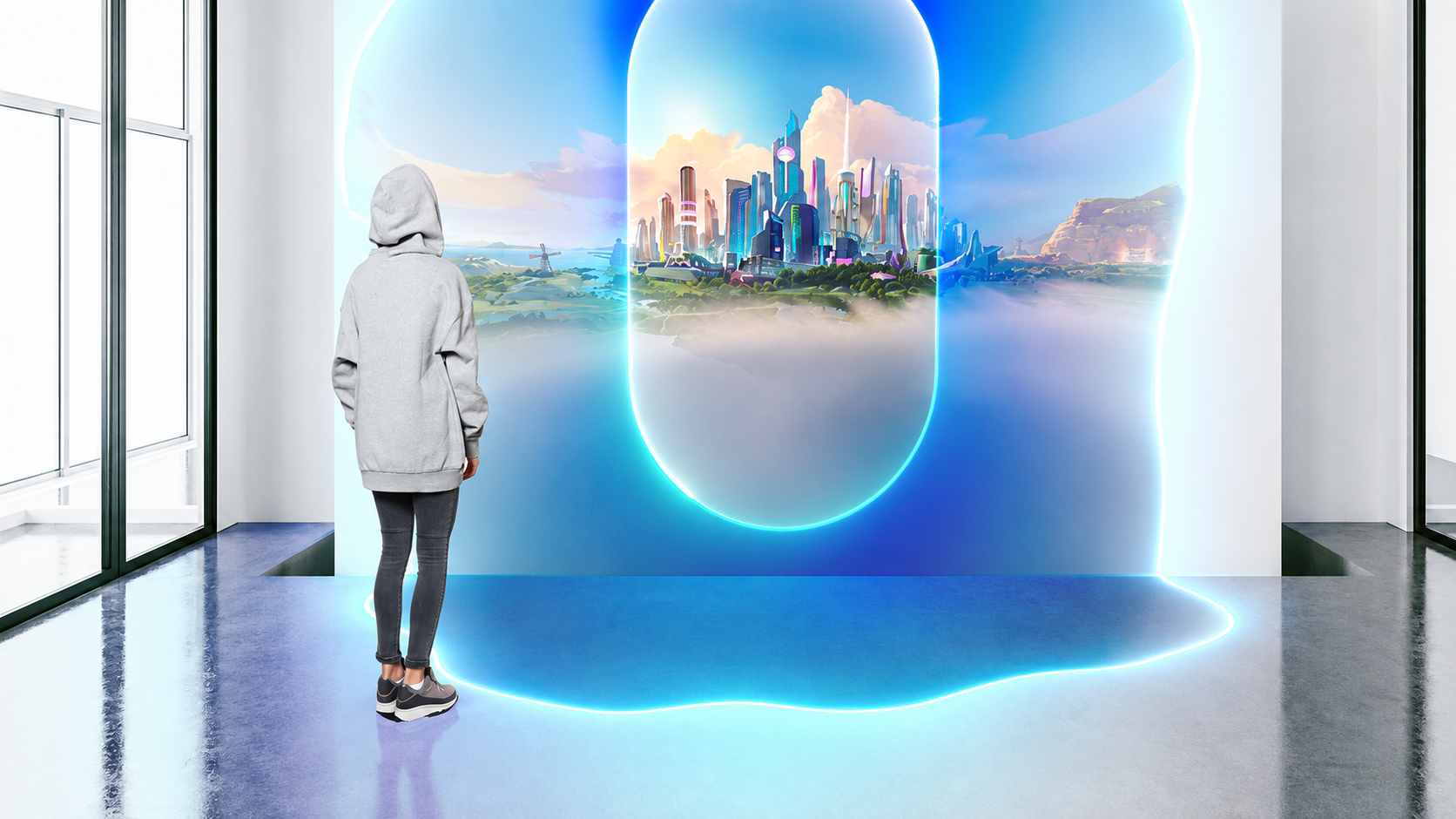
Concept art by Shigeru Mizoi
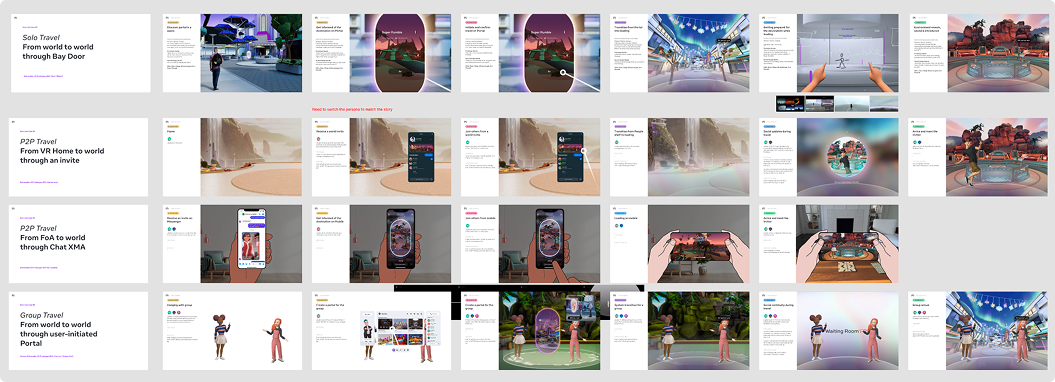
Select examples of journey maps and detailed specs that kept teams aligned and the experience consistent.
The debut
Home was part of both Connect 2025 keynotes. It shipped to headsets in Horizon OS v81, replacing the legacy home environment.
Mark Zuckerberg, Meta CEO, Connect 2025 Keynote
Andrew Bosworth, Meta CTO, Connect 2025 Keynote
Collective excellence
Creative team. Artists, technical artists, game designers, product designers, content designers. I was the directly responsible individual leading this group.
Partners. Engineering, product management, UX research, sound, content design, and a core group of Meta executives.
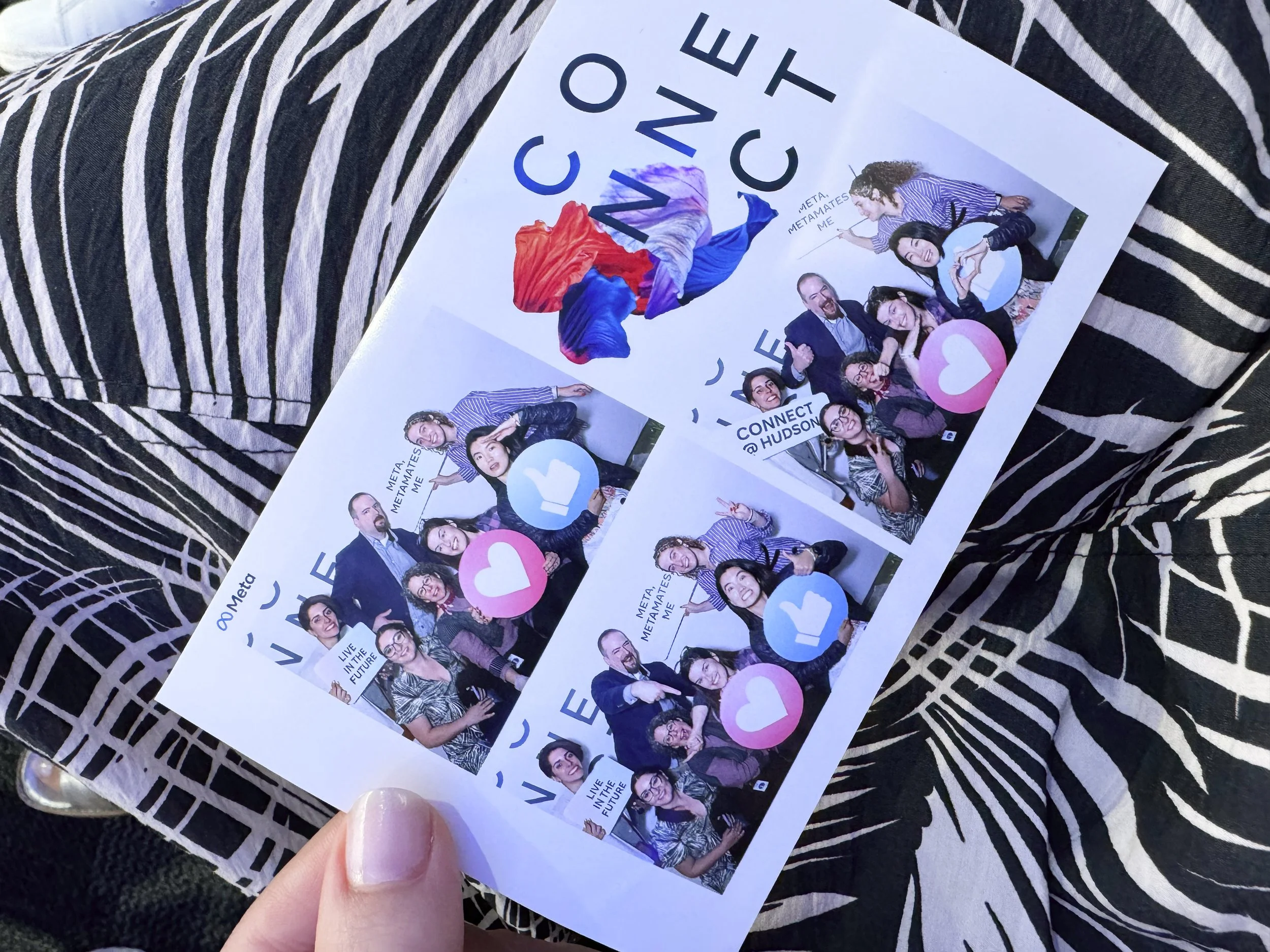

“Ani closes critical gaps, aligns teams through creative operational excellence, and leads with the kind of clarity and resilience that elevates everyone around her.”
— Jason Rubin, VP of Design • Meta